
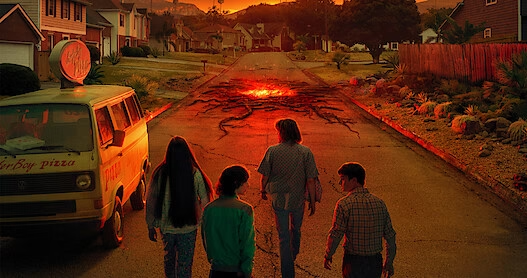

⚠️ Spoiler Warning: This review discusses major events from the final season of Stranger Things.
It’s over.
After years of Demogorgons, bikes at night, synth music, friendships, heartbreak, and the Upside Down creeping into Hawkins… Stranger Things has officially ended.
And I’m not going to lie — finishing that final episode felt like saying goodbye to a part of my own life.
The Beginning of the End
From the very first episode of this final season, you can feel it: this isn’t just another chapter. This is closure.
Hawkins is broken. The cracks between worlds are no longer hidden. The stakes aren’t theoretical anymore — they’re personal, immediate, and irreversible.
What impressed me most was the tone. The show didn’t try to recreate season one’s innocence. It accepted that these characters — and we as viewers — have grown up. The atmosphere is heavier. The danger feels real.
And for once, I genuinely didn’t feel like everyone was safe.
Did the Final Season Deliver?

Yes… but not in the way I expected.
I thought the final season would go bigger. Louder. More explosive.
Instead, what surprised me is that it went deeper.
Yes, the action sequences are intense. Yes, the visual effects are some of the best the show has ever had. Yes, the Upside Down finally feels fully unleashed.
But what truly carries this final season is emotion.
Every main character gets a moment that feels intentional. Conversations that feel like real goodbyes. Decisions that carry weight.
Nothing felt rushed. And that matters.
The Most Emotional Moments
Without listing every scene, I’ll say this: the final episodes are built around closure.
Friendships that defined the show come full circle. Characters who started as comic relief are given depth. And the emotional payoffs feel earned because we’ve spent years with these people.
There are quiet moments that hit harder than the action scenes.
A look. A hug. A final conversation.
And that’s what made it work for me.
Breaking Down the Ending
The finale doesn’t try to shock just for the sake of it. Instead, it focuses on consequence.
The battle feels final. The threat feels resolved. And Hawkins will never be the same.
What I appreciated most is that the ending isn’t artificially perfect. It’s bittersweet. There’s hope, but there’s also change. Growth. Scars.
It feels like the end of childhood — which is exactly what Stranger Things has always been about.
This wasn’t just a sci-fi story. It was about growing up.
And the finale understands that.
Was This the Right Way to Say Goodbye?
For me? Yes.
Could they have gone darker? Probably.
Could they have gone more shocking? Definitely.
But they chose emotional truth over shock value. And I respect that.
The final season doesn’t erase what made the show special in the beginning — it honors it.
When the credits rolled, I didn’t feel empty. I felt nostalgic. Grateful.
Stranger Things wasn’t just a Netflix hit. It was a cultural moment. It defined an era of streaming. It gave us characters we grew up with.
And saying goodbye feels strangely personal.
It’s rare for a show to stick the landing.
But this one did.
And Hawkins will always feel like home.
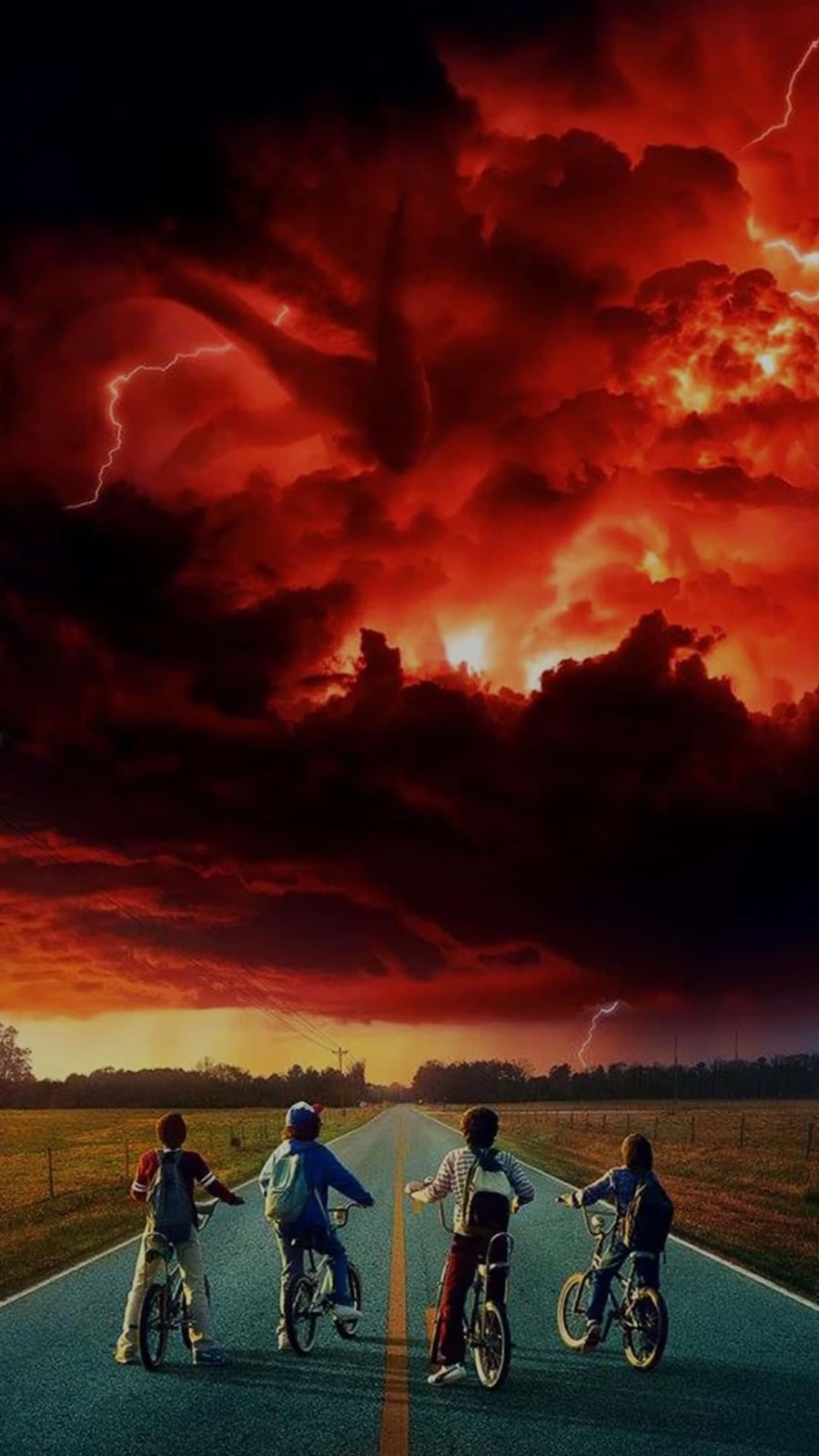
Ending Explained in Detail (Full Spoilers)
Alright. If you’re still here, you’ve finished it. Let’s talk about what actually happened.
The Final Confrontation
The last battle isn’t just physical — it’s emotional.
The connection between Eleven and Vecna finally comes full circle. What started in that lab years ago reaches its breaking point here. This time, though, Eleven isn’t fighting alone. The difference between season one and now is clear: she has people. She has family.
And that’s the key theme of the finale — power alone was never enough. Connection is what wins.
The showdown itself feels intense but grounded. It’s not just spectacle. It’s resolution. Vecna isn’t defeated through a sudden twist, but through a culmination of everything that’s been building since the beginning.
The Fate of Hawkins
Hawkins doesn’t simply “go back to normal.”
The town is scarred — physically and emotionally. The cracks between dimensions may be closed (or stabilized), but the damage remains.
And I actually loved that.
Too many shows reset the world like nothing happened. Stranger Things doesn’t. Hawkins feels like a town that survived something traumatic. There’s rebuilding. There’s grief. There’s quiet aftermath.
It makes the victory feel earned.
The Characters’ Final Moments
This is where the finale really lands.
Each core character gets a closing note that reflects who they’ve become:
- Eleven is no longer just a weapon — she’s a person with agency.
- Mike steps out of insecurity and fully commits to being her emotional anchor.
- Dustin carries the emotional weight of loss and maturity.
- Hopper finally gets something close to peace.
- The group isn’t just kids on bikes anymore. They’re young adults shaped by what they survived.
What hit me most wasn’t a dramatic twist — it was the quiet final scenes. The sense that life moves forward.
No massive cliffhanger. No “to be continued.”
Just growth.
Was It a Happy Ending?
Not exactly.
It’s bittersweet.
There’s hope. The immediate threat is over. The Upside Down is no longer actively consuming Hawkins.
But innocence is gone.
And that feels intentional.
The ending reflects what the show has always symbolized — the transition from childhood to adulthood. You don’t defeat growing up. You move through it.
And that’s why the ending works.





Leave a Reply